
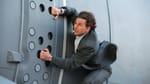
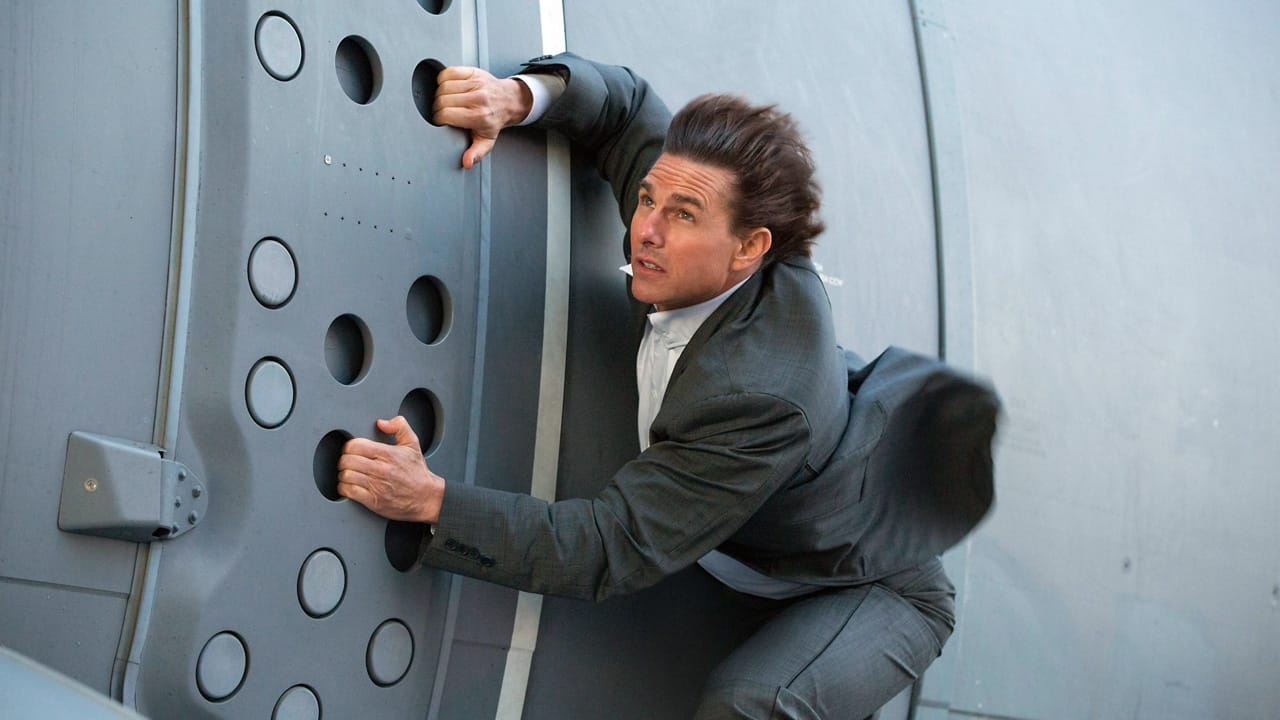
Is Tom Cruise lying about doing his own stunts?
If you want to lie: tell the truth, but omit the fact that you don't want people to know.
— Unknown
We saw in the video How they tell big lies with movie trivia that Tom repeatedly told the media that the planes in Top Gun 2 were all done practical, no CGI and so on, and yet he neglected to mention that while many of these planes were captured on camera, they were serving as stand-in placeholders, used as high-quality lighting/movement reference for the VFX artists - who replaced them with digital models.
One wonders then, could Tom be selling us some other half-truths with regards to him famously performing his own stunts?
By coincidence I recently had a conversation with a professional licensed stunt-man (or stunt actor) who has worked on big films in multiple continents, and I asked him his professional opinion (or educated guess) on what he believes Tom is (and isn't) doing.
My natural bias
Before this conversation, my baseline presumptions were along these lines:
- It would be too ridiculous for Tom to be doing NONE of the stunts, but how much is he really doing?
- Tom getting even minor injuries would cost so much time and risk to the production that you'd think the insurance policy would not permit him to do stunts - it just wouldn't be worth the apparent PR value of having him do it.
We are well beyond the days of 1980s action films where female actresses would suddenly switch into a man-in-a-dress for the big stunt moments. With the sophistication of VFX these days, there is no particular audience-experience reason for Tom doing many of these stunts himself when a stunt performer with similar body type could wear a latex mask and have some CG face-replacement tweaks as needed.
The question then is, how important is the PR value of Tom "doing his own stunts" that they would risk injuring their star and throwing out the production schedule on a multi-hundred-million dollar film? After all, there are occultic release dates to be hit...
A stunt actor's perspective
Note: this is of course speculation / and these are educated guesses on the part of an industry professional.
With a more nuanced understanding of the industry and workflows, claims can be examined in a more objective fashion. The stunt actor (let's call him Adam had some interesting points.
-
Tom is officially the lead producer on the Mission Impossible films, and as such (to the extent one believes Hollywood stars are free agents) he could theoretically decide on whether the financial risk of him doing stunts, is worth it for the film itself.
-
A stunt is never done just once, it is done a bunch of times, and from a variety of angles in order to get the proper camera coverage. Tom would likely only do one or two of those angles, where his face is most prominent. It's quite possible they do not do face replacement, because the other angles and shots have similar-enough stunt doubles with bodies and latex masks that look similar enough to not require it.
-
Tom would likely never be the one doing it first, or even close to first.. As they say, the leading edge is the 'bleeding edge' and when sorting out wire rigs, distances, timing and so on, the real danger comes from when the stunt is being ironed out, and Tom would presumably not be participating at this stage. Adam suggested that a stunt might be done 8 or 9 times, and gradually refined, before Tom ever got close to attempting it himself.
-
As an example, if a scene had Tom's character falling through a glass coffee table, Tom might well perform a take or two of the top-down shot right on his face as he falls through the glass, but he wouldn't hang around doing side angles, up-wards angles or potentially wides and so on.
My takeaways
I'm not here to take away from the stunts that Tom does participate in, or the physical and mental challenges that he overcomes in doing so, but rather to put all of this in it's proper context and see what we can learn from it.
Here's what I am surmising from this:
-
I am going to coin a term here (well maybe, at least in this context) of 'vanity stunting', as a take on 'vanity hunting' or 'canned hunting', where guys travel to Africa with high-powered rifles and hired-protection and pay big money to basically shoot old and sick animals. Setting aside the argument of whether this is a beneficial practice, the point is that these men are really only 'hunting' in a very narrow sense of the word. They have guard rails around them, everything is lined up and prepared, and they the risk and uncertainty which may be inherent to 'traditional hunting' has all but been removed.
-
The 'value' of Tom doing these stunts would appear to be purely for PR and Tom's own ego, and it no doubt costs the production far more time and money to accomodate him doing (even part of) the stunts, than it would to just hire professionals and let them do their job. There is a business model called 'voluntourism' where people pay for the experience of going to third-world countries and building wells or irrigation and so forth for locals, while having their picture taken along the way. The problem is, the quality of the workmanship is often so bad that they need to be destroyed or redone, and maybe they didn't want or need that infrstructure anyway. Ultimately the people just wanted the money so they could use it themselves as they saw fit.
-
In this way, Tom is not replacing a stunt man, he's creating more work for actual stunt men to do around him, to make sure what he does is as absolutely safe as possible. Like a Sherpa who carries a banker's luggage to the top of Mount Everest, the banker could not do this without that support team, and the sherpa frankly doesn't need to be there risking his life, just to reduce the risk of an amateur losing his life... except for the money of course.
So what's it all for?
"Propaganda does not deceive people; it merely helps them to deceive themselves".
— Eric Hoffer
It would appear that the only real reason for Tom to be bothering to do these stunts at all is to further sell the 'authenticity' of Tom the man being able to physically do the things we see 'Ethan Hunt' do on screen. He's not doing all of the stunts anyway (even by his own admission), so it's more about saying that he could, rather than that he does.
It's not dissimilar to the presentation of Tom's 'wives' and 'girlfriends' over the years, that he jumps up onto Oprahs sofa to declare his love for. Do people really believe in their heart-of-hearts that he's straight? Or have they just been told these things enough times that they can choose to believe he is, if they prefer to believe the fantasy.
Perhaps Tom's stunt-man persona, then, is not only to sell his individual leading-man image, but to promote the entirety of cinema as a legitimate art-form in the minds of the general public itself. A way to sell actors as people to be revered, rather than as the liars and 'hypocrites' they were thought of as in earlier times. The greek word 'hypokrites' literally means stage actor - that is where our word hypocrite comes from.
Maybe this whole 'actors doing their own stunts' idea is just one part of a much bigger mechanism to maintain our reflexive deference towards Hollywood and its 'stars'. Maybe Tom is jumping off buildings and holding onto planes, just so that when the time arises — and the public has an important decision to make — we listen to what he says.
No spam, no sharing to third party. Only you and me.








Member discussion