
AI: An electric wheelchair for your mind

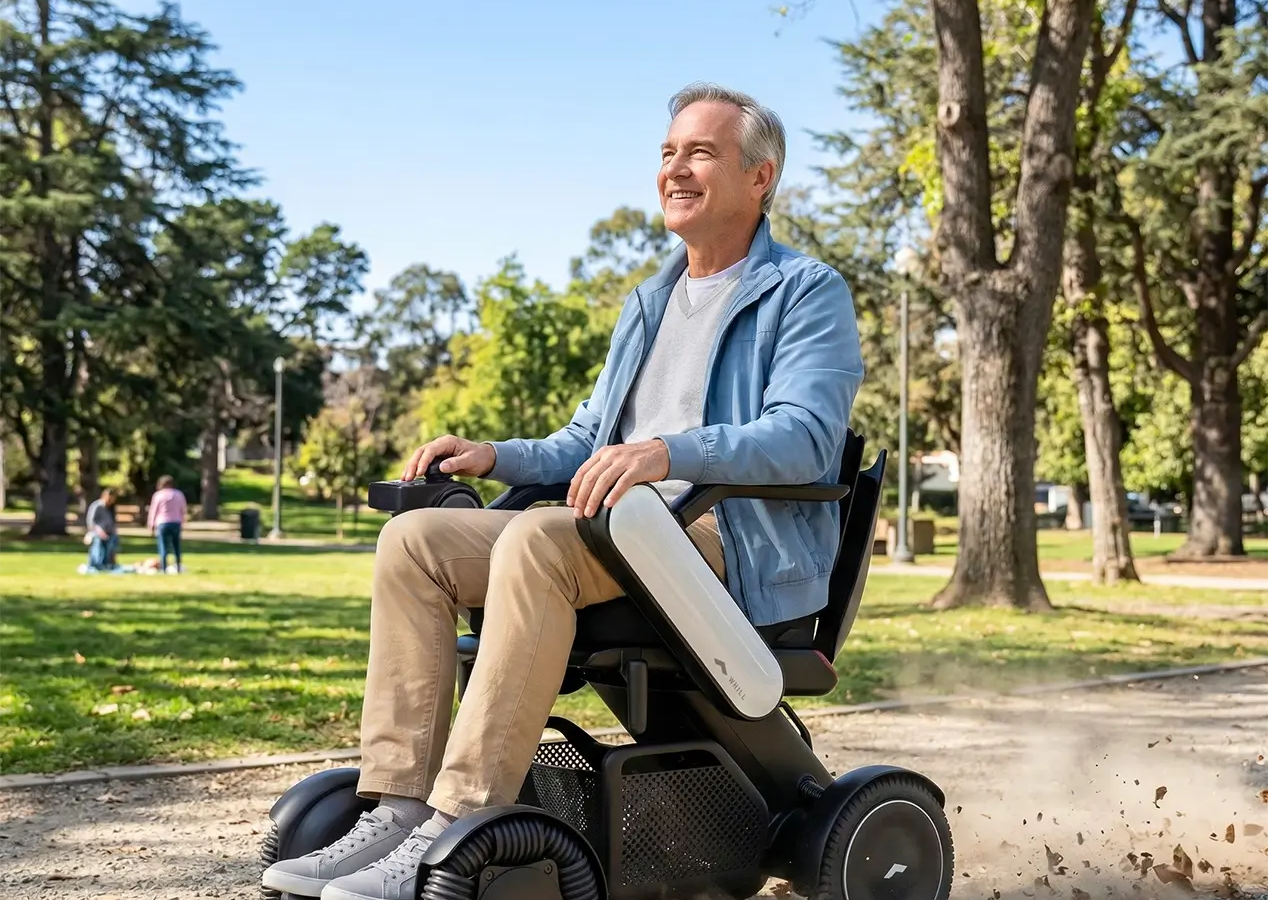
If you've ever broken a bone and needed to have a limb in a cast, you know that muscles deteriorate fast. By the time your leg or arm comes out 6 weeks later, it doesn't just look grey and sickly — it's skinny, atrophied and barely works. You're pretty much starting at square one like a newborn baby, to rebuild the muscle so you can use the limb again for daily tasks.
If you — when able-bodied — started relying on a motorised scooter for your daily errands, how long do you think it would take before you no longer felt comfortable or confident walking around without the hardware?
If the habit continued and you miraculously conceived and/or birthed a child while relying on the mobility scooter, you'd probably just get a chair for the kid too. The school encourages kids to be 'scooter literate' after all.
If the chairs had enough gadgetry (entertainment, navigation, food delivery) and the broader society eco-system accommodated it, maybe you'd just adapt completely to this new and more convenient way of life. This is the future, after all, why fight it?

The obvious concern here — aside from the health hazards of doing zero exercise and your body not performing any of the normal functions it was designed for — is that you would become entirely dependent on the chair for your existence. You'd be a literal cripple.
How many generations would it take before your descendants had never seen someone walk with their own eyes, let alone ever attempted to walk themselves? Maybe they'd heard stories about this 'walking', but could not verify if they were real or pure mythology. Of course, everyone in 2065 knows that our 'vestigial' legs couldn't possibly support these chunky torsos.
The AI Connection
With AI being unnaturally (!) pushed into every possible orifice via corporate employers, schools, mainstream media and so on, we are already seeing victims of the brain rot that reliance on a 'tool' like this inevitably creates. Lucky these people can discuss it with their AI therapists.
If you need AI to write an email, remember the point of a meeting you just had, communicate with your boss, or find out basic information in your daily life — you might be already on your way down the path of mental retardation. This would be a problem even if AI had our best intentions at heart and was purely trying to make our lives more 'convenient'. Obviously, it doesn't, and it's not.
I'm genuinely curious as to what things will look like in 10 years, given the rate at which people are becoming functionally reliant on tools that are taking away personal decision making and cognition on such a granular level. Will we get to the point where the only 'thinking' that people do themselves, is to scrawl an X on the screen and cede all decision making power over to the robot, from that moment forward?
Delegation = the memory hole
When (most) people hire doctors/lawyers/accountants/almost anything, they go into it with the mindset that "this person is an expert, I'm paying them, so I can turn my brain off". People don't want to know how that person's job involves because it would detract from their schedule of watching Netflix and going to see the Odyssey on 70mm.
Even the people who perform those jobs barely want to understand it, beyond the bare-minimum they are required to know to get paid every month.
And so it will be for any task that people start delegating to their 'AI agents'. The first 'generation' to use a tool already know how to do the task, and so can verify that the task is being done correctly — they can check its 'working'. The next generation just knows how to write the prompt, and takes the rest as correct on assumption. And that's when the masses will be toast. It already is that situation for the disciplines I referred to before (law/accountancy/finance/construction medicine and so on), the level of ignorance is just going to become more widespread and more granular.
Just imagine the average person, but vastly more naive and narrow in their understanding of almost any topic — essentially a population filled with a conman's wet dream.
Where to from here?
I've heard of people using AI to ask questions like "how to get sand out of my suitcase?" after a trip to the beach. What chance do these people have to withstand another COVID push and coercive offering of DNA-altering injections? Would it even occur to them to question it?
If you decided to handover your decision making for a year — and arguably people are already doing this to a significant degree — how difficult would it be to get those 'thinking muscles' back again? Would attempting to re-start using your brain, be like trying to walk again after waking up from a coma with spinal damage?
The gormless victims of AI reliance are lauded by the system just like those who blindly follow doctors as infallible experts, and will presumably suffer the consequences similarly. If any of these people miraculously woke up one day with a sneaking suspicion that they've been duped, would they still have the motivation or confidence to start climbing their way out?
The good news
I'm making an effort to end these articles and videos on a positive so here it is, in case it's not obvious: the level of stupidity in the population will be commensurate with the opportunity to deliver those services. You won't need to be smart, you'll just need to be a one-legged man in the country of the paralysed.
No spam, no sharing to third party. Only you and me.












Member discussion