
A curious reason some documentaries don't get made

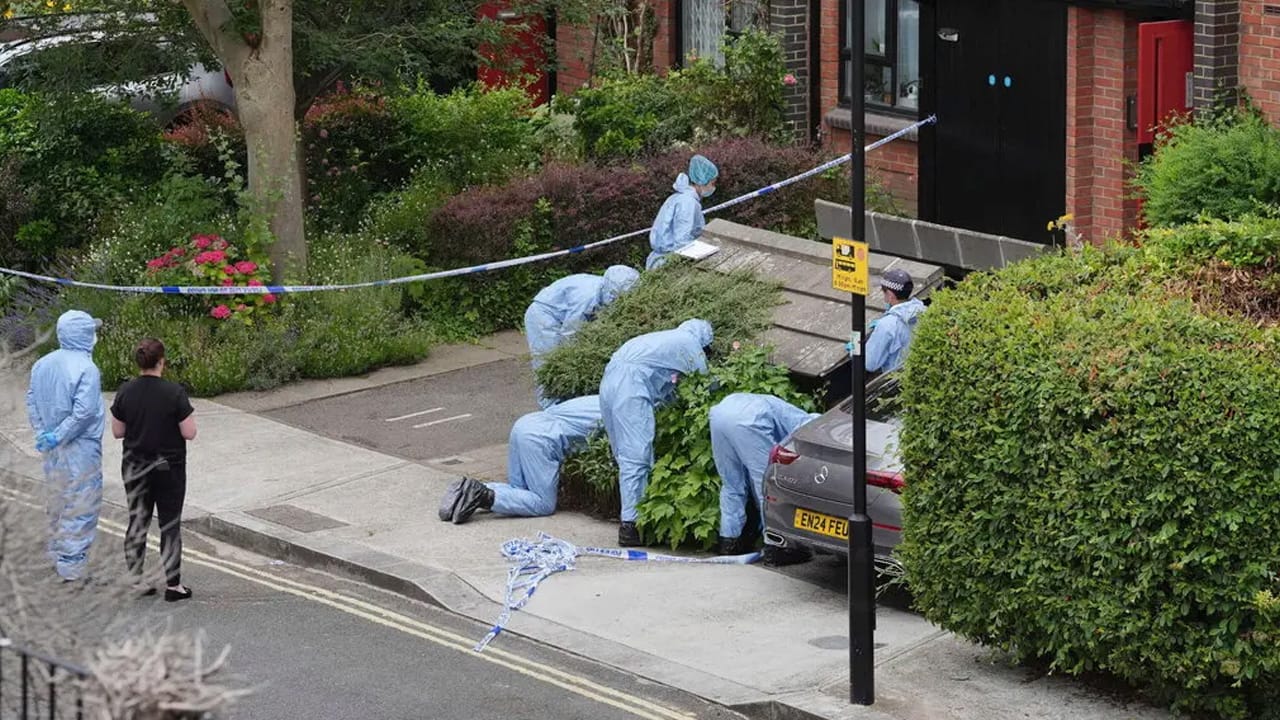
Some years ago I was asked by a documentary producer about potentially shooting some footage for a film about a man who had murdered a couple of women and put their bodies in suitcases (not the story in the header).
The story we are told: a man kills one girl, puts her in a suitcase, then invites another to his apartment, kills her, then puts her in a second suitcase. He records a video on his phone talking about what he'd done, and shortly afterwards calls the police to come to his apartment.
The particular case itself is not important (though some of you may recognise the details), but what is interesting to note is why that documentary did not go end up going ahead. The reason — if we consider it — is quite revealing of many documentaries that do end up getting produced and distributed en masse.
A problem of 'access'
As the saying goes in the documentary game, "it's all about access". Without (somehow) having access to a particular person, event, archival material, footage rights, and so on, it's just not viable to produce (and legally distribute) an engaging enough story.
For example, there is a massive difference (from a general audience point of view) between making a voice-over driven opinion piece on David Beckham by piecing together clips of him from videos found online, versus being able to interview him (and his friends) in his house, ask him your own questions and follow him around.
The suitcase-murder documentary did not go ahead for one primary reason — the killer had already confessed in video form, into his phone.
The 'problem' from a documentary POV is indeed that any ambiguity about the identity of the killer had been removed, but not for the reason you may be thinking. Sure, the audience already "knows" that the guy is the killer - he just told us — but there's a bigger problem at play.
A documentary of this nature is more about the 'why' - why did he do it? Since he is locked up and cannot be interviewed, that only leaves his friends and family to comment or weigh-in on what they speculate might have happened. How did he snap? Were there any warning signs? And so on.
The critical question however, is what reason would they have for wanting to participate this documentary?
Ultimately, assuming they want to salvage whatever can be salvaged with regards to:
- The man's legal situation
- The man's reputation
- The family's own reputation
...what could they possibly stand to gain by talking to these documentary producers? Especially when they know that it's in the filmmakers' interest to squeeze the most drama out of anything they are able to capture, at the (potentially life-ruining) expense of any participants involved.
And so this is the problem: the only reason that any (loyal) family or friend would have for participating in this documentary, is if they were able to introduce ambiguity or doubt about the fact that the man had done the murders at all. With the man having already recorded his video confession, that potential had been extinguished, along with the ability to get the film off the ground.
What does this mean?
It actually goes further than that — oftentimes the family will only participate with media / documentary producers on formal conditions of how certain aspects of their murder-suspect loved-one are presented. If this arrangement is not honoured, the interviews stop, and so on.
This should not be so hard to believe — consider the hypothetical example I mentioned earlier of a documentary crew in David Beckham's house. The idea that this would occur without elaborate story-outlines pre-approved, editorial veto power, NDA contracts signed and so on is laughable. It's just too much of a liability for David (or his 'people') to entertain participation without those in place. In all likelihood any documentary about people like him is initiated/produced/steered by his own people, albeit with some hired hands brought in (directors/cinematographers/editors etc) to make it good.
An unlikely partnership
If you think about it then, the family members want to present their murder-suspect loved one as innocent (or at least potentially innocent) and the filmmakers want to do the same, because it gives them a story.
The idea of a wrongful accusation of murder is a very compelling premise to the average viewer, who is beside themself thinking about how horrifying it would be if it happened to them. This makes for great entertainment.
Likewise, to extend a narrative over a feature film (or even moreso, a series) you need to continously play with the audience's belief and perception of the situation. Essentially you need to flip them back and forth on what they believe to be the case. Is he guilty? Is he innocent? Oh maybe he's guilty.. cliffhangers, new juicy evidence and plot reveals and so on.
If the full picture or damning evidence was revealed early on, the story would essentially be over in the audience's mind. The filmmakers therefor withhold that information in order to preserve that ambiguity. Maybe they reveal it at the end, or maybe they just never bring it up - the audience is left wondering how on earth such an innocent person could have been convicted — and it only becomes clear when you read the court transcripts, that all sorts of critical evidence was deliberately left out of the film.
Some examples
The film 'Searching for Sugar Man' presents a 'mystery' of why this talented musician had dropped off the face of the earth and was not a big star. The problem is twofold: the director (and others) did already know where he was, and they knew why he was not a successful touring musician - he was a hopeless alcoholic.
The film withheld both of those facts in order to create (and sustain) a narrative, and it won the best documentary feature at the 2013 Oscars. Perhaps some of this weighed on the director's mind since he jumped in front of a train a year later, at the age of 36.
'The Staircase' is a classic documentary film about a guy who claimed that he came home and found his wife dead at the bottom of their staircase. In fact, as the documentary progresses it's revealed that this exact situation had already happened 8 years before with his first wife, when they were living on a military base. Ridiculous. Despite this, the filmmakers manage to create a documentary series playing with the idea of whether this man is a double-murderer, or the unluckiest man in the world.
Again, you have to do your own research online to find out that (among other damning evidence) both the man's sister and daughter, believe him to be guilty (for a variety of reasons), information that is conveniently left out of the film.
In conclusion
Even setting aside entire documentaries (and cultural phenomenons) being planned and executed over decades as cultural engineering projects — see Miri Finch on the Madeleine McCann story — it's useful to realise that there are inherent dynamics at play in documentary production that result in the nature of the messages we see, those that are never produced because they "don't make sense".
Like with so many other examples, the world systems seem to be arranged supernaturally such that far more people can be pushing agendas and operating as 'useful idiots' while chasing fame/money/whatever, than those who seem to be really consciously aware of what they are participating in. Dynamics like those in this article, appear to be yet another facet of the 'hidden hand' guiding the implementation of agendas through cascades of ignorant participants.
Lastly I should note, from my point of view, a documentary which is produced by 'outsiders' without any official access to participants (and as such, without any contractual strings attached) might just be far more valuable and insightful than those which do.
No spam, no sharing to third party. Only you and me.









Member discussion